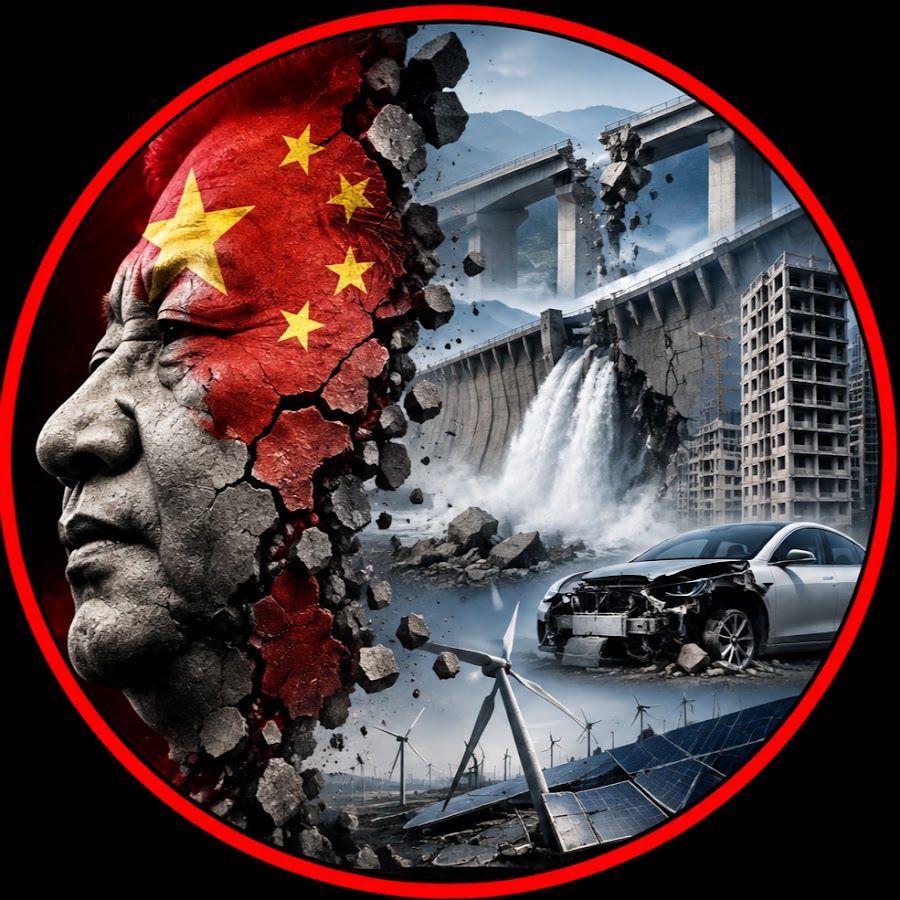
China’s Solar Panel Miracle Is Already Collapsing — Manufacturers Are Calling It a Price War
October 1, 2026 · 19 min
In less than 20 years, China went from a minor player in solar manufacturing to controlling almost every stage of the photovoltaic supply chain. By 2024 it accounted for more than 86% of global module production. Yet some of the companies that built that industry are now selling panels for less than it costs to make them.
This video argues that the problem isn’t solar technology, which works and is in huge demand. The problem is a manufacturing system that grew faster than the market could absorb.
How China built the machine
A solar panel looks simple: glass, silicon cells, an encapsulant, an aluminium frame and some wiring. Making it at scale is not. Quartz becomes polysilicon, polysilicon becomes ingots, ingots are sliced into wafers, and wafers become cells that are assembled into modules. China built almost the entire chain, and clustered the stages close together. Spreading fixed costs over huge volumes turned solar into an industrial commodity, and prices collapsed.
From expansion to overcapacity
After 2021, companies across the Chinese supply chain kept announcing new factories. Each decision made sense on its own, but everyone made the same one.
- The IEA says potential global supply-chain output more than quadrupled between 2021 and 2024.
- By 2024, module manufacturing capacity was around 1.1 to 1.35 terawatts a year, more than twice annual global installations.
- One industry dataset put capacity at roughly 1.4 terawatts, with about 83% in China.
How a boom becomes a price war
Idle factories still pay for electricity, maintenance, salaries and loans, so manufacturers either shut lines or cut prices. In 2024, Chinese polysilicon prices fell roughly 39.5% and module prices roughly 29.7%. The IEA reported many Chinese manufacturers with negative net margins, the largest around minus 10%, and cumulative losses approaching $5 billion since the start of 2024.
Buyers, meanwhile, benefited. The world installed between 553 and 601 gigawatts of new solar in 2024, roughly 29% more than the year before, and nearly 60% of it went into China.
A concentrated supply chain
With almost every stage in one country, the world is exposed to whatever happens there. The IEA estimated that a month-long halt in Chinese supply-chain exports could cost around $1 billion of module production elsewhere. The United States, India and the European Union are pushing domestic manufacturing, but the IEA found China still had the lowest production costs, and copying a factory means copying a whole ecosystem.
The recycling wave
IRENA projects global solar PV waste could rise from about 0.2 million tonnes in 2021 to more than 200 million tonnes by 2050. Panels contain aluminium, copper, silicon and silver, but separating them doesn’t always pay. Still, the IEA estimates recycling between 2040 and 2050 could supply almost 70% of the industry’s silver demand.
What comes next
The IEA expects oversupply and low prices to slow new manufacturing investment, especially in China. The first era was expansion; the next is likely consolidation. Every option involves a trade-off: cutting production raises costs for developers, subsidies fall on taxpayers, and relying on imports means accepting a concentrated supply chain.
Key takeaways
- Solar demand is growing strongly; the pressure is on manufacturing economics, not the technology.
- By 2024, global module manufacturing capacity was more than twice annual installations.
- Oversupply drove steep price falls and negative margins for many Chinese manufacturers.
- Concentration makes the global solar supply chain cheap but exposed to disruption.
- Needing more panels doesn’t automatically mean needing more factories.
More from the channel: @ChinaUnderStress