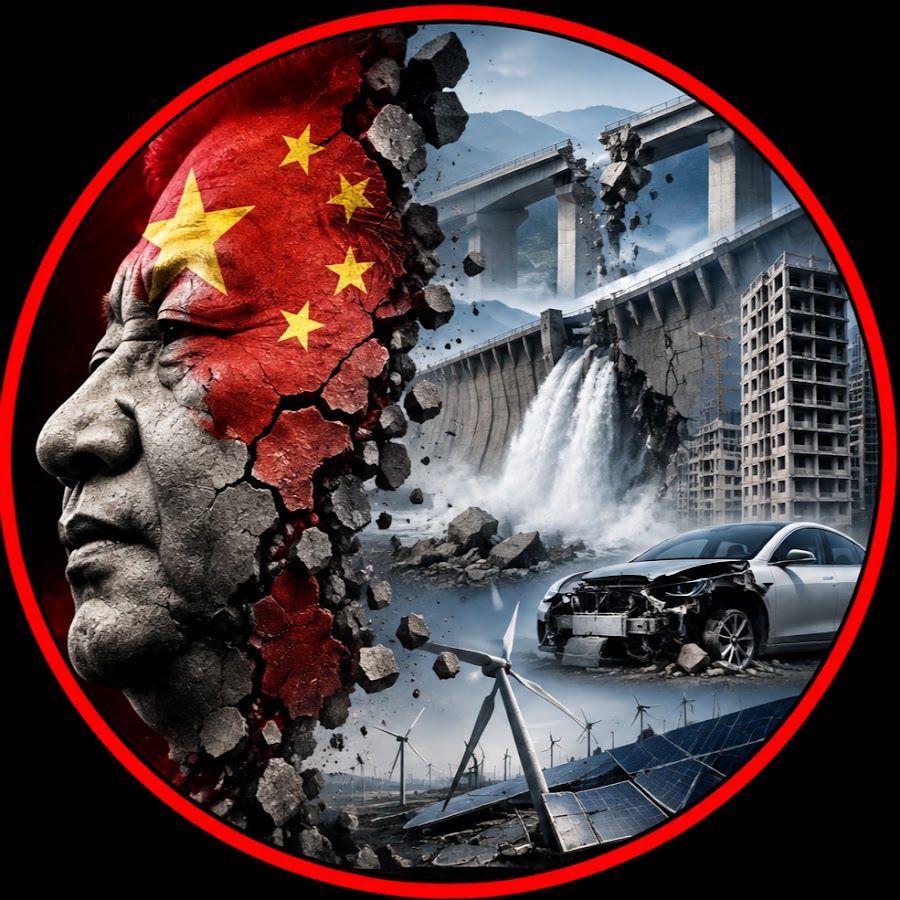
China Ran Out of Sand and Started Crushing Mountains Instead
October 19, 2026 · 21 min
China’s construction boom ran on river sand. Between 2011 and 2013 the country used more cement than the United States did in the whole twentieth century, and every tonne of it needed angular, water-tumbled sand to bind. When dredging began to break the Yangtze and then Poyang Lake, the government shut the rivers and lakes down. The industry answered by crushing mountains.
This video argues that the pivot to manufactured sand, or M-sand, was a genuine industrial achievement, and that the problem is not willpower but geology. A crusher does in three seconds what a river does over millions of years, and it keeps everything the river would have washed away. The result is a slow chemical chain reaction inside concrete that does not topple buildings, but can shorten their lives by decades.
Why not all sand works
Sand makes up roughly 40% of concrete by volume, but desert sand is useless. Wind rounds the grains into tiny spheres that act like ball bearings and never lock together. Rivers break rock down while leaving the edges sharp, which is why the Yangtze became the greatest natural sand factory in Asia, feeding Shanghai, Nanjing and the whole eastern seaboard.
Hollowing out the Yangtze and Poyang Lake
- Dredging dropped the Yangtze riverbed, sped up the flow and destabilised bridges and banks. Beijing banned mainstream mining in the early 2000s.
- Demand simply moved to Poyang Lake in Jiangxi, China’s largest freshwater lake. Extraction was estimated at up to 236 million cubic metres a year, about thirty times the natural replenishment rate.
- The water turned permanently turbid, fish stocks fell, the endangered Yangtze finless porpoise was threatened, and the lake’s role as a flood buffer was damaged.
- By the late 2010s enforcement campaigns seized ships and arrested operators. The sand rush ended, and cities still needed billions of tonnes.
Crushing mountains at scale
Quarries blast limestone, granite and tuff, then feed it through jaw crushers, cone crushers and vertical shaft impactors that hurl rock against steel anvils. Single sites produce tens of millions of tonnes a year. The national standard GB/T 14684 was updated to govern M-sand in structural concrete, and it was promoted as the sustainable future of infrastructure.
The dust problem
Crushing produces huge amounts of stone powder, particles under 75 microns. A river carries that dust away. A quarry leaves it in the sand. A small, controlled amount can fill voids, but under production quotas the powder content rarely stays in the sweet spot. The dust has enormous surface area and soaks up mixing water, so the concrete turns stiff and will not pump. Crews on site do the obvious thing and add more water. Extra water that never reacts with cement evaporates and leaves pores behind, and that wrecks the water-to-cement ratio that governs strength.
Bleeding, shrinkage and cracks
Overwatered concrete bleeds. Heavy aggregate sinks, water rises, and the top of a column becomes a weak porous crust. As the excess water leaves, the concrete shrinks against the rebar restraining it, and since concrete is weak in tension, it micro-cracks. Those cracks let oxygen, moisture and chemicals reach the steel long before any wind load or earthquake arrives.
When clay eats the chemistry
Polycarboxylate superplasticizers were the fix. They coat cement particles, make them repel each other and let concrete flow without extra water. But mountains contain seams of soil and reactive clay such as montmorillonite, and it all goes into the crusher together. Clay absorbs the polymer before it reaches the cement, the mix flash-sets in the truck, and plants either overdose the admixture or reach for the hose again. The methylene blue test detects this clay, but washing sand needs fresh water, settling ponds and sludge presses, so cheaper quarries skip it. Industry press has reported falsified test results and plants accepting substandard deliveries to keep cranes moving.
Key takeaways
- China’s river and lake bans were real environmental wins, but they left the industry with nowhere to go but the mountains.
- Manufactured sand can be excellent when washed and graded. Unwashed, it carries dust and clay that break the concrete’s water balance.
- Clay neutralises superplasticizers, and overwatering on site undoes the whole chemical defence.
- The damage is slow degradation, not sudden collapse. Hundred-year structures may show their age at thirty, with the bill arriving in the 2040s and 2050s.
More from the channel: @ChinaUnderStress